

Notices and time bars, with their supporting records
Record each date and its contractual basis, check it yourself, and keep the notice and evidence of service alongside it
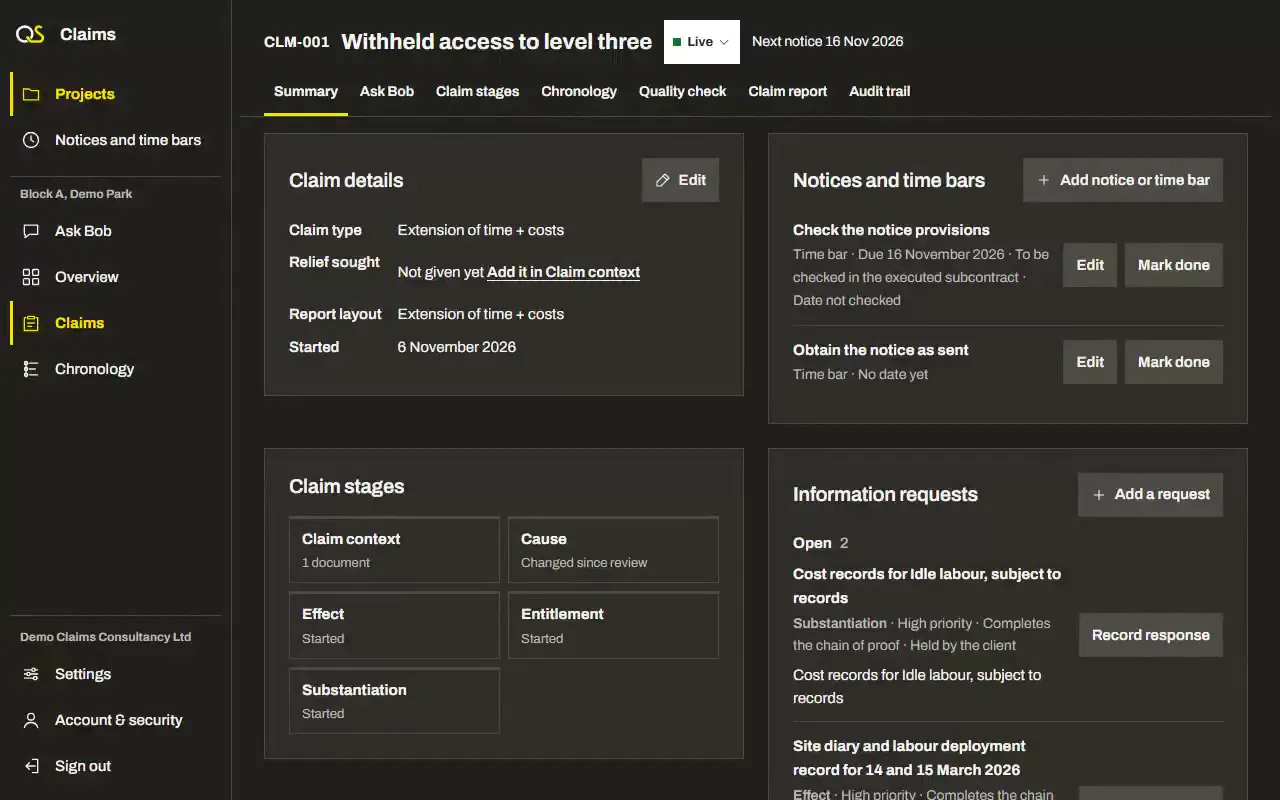
What each notice and time bar shows
The date, its basis and what has been recorded
Its clause and basis
Keep the clause and explanation of how the date is worked out with the notice
Known and unknown dates
Keep an unknown date open instead of inventing one, and distinguish checked dates from those still needing review
Your confirmation
You confirm a date after checking the contract. Bob’s proposal does not confirm it for you.
Given or received
Record when and how a notice was given or received, its recipient, supporting document and related time bar
Across live projects
See the account’s notices in date order, including overdue dates and items not yet checked
Changes kept
Changes to notice records keep their before and after values in the audit trail

Questions about notices and time bars
Do amendments count?
The contract summary keeps cited clauses and a separate amendment check for you to verify
Can a notice have no date?
Yes. Keep the basis and clause, and add the date when you have checked it.
Will it tell me whether a notice was valid?
No. Recording a notice, a date or a delivery document does not establish valid service or compliance.
More features
Claim stages
Build each claim in order, from its context to the evidence that proves it
Claim context, cause, effect, entitlement, substantiation, records, information requests
Chronology
Put confirmed events and their source records in order for each claim
Events, dates, sources, issues, confirmation, exports
Quality check
Review the evidence, gaps and calculations before the claim goes out
Clarity, causation, notice compliance, evidence, calculations, counterarguments
Claim report
Read, edit and export the claim report in the layout for its type of claim
ICCP layouts, extension of time, additional costs, variations, export
AI agent
Bob reads the claim’s records and helps identify missing evidence for you to review
Reading progress, checked quotations, gaps, information requests, review findings
Security
Keep your claims, and your clients’ claims, private to you
Two-step sign-in, account checks, private documents, audit trail, your data